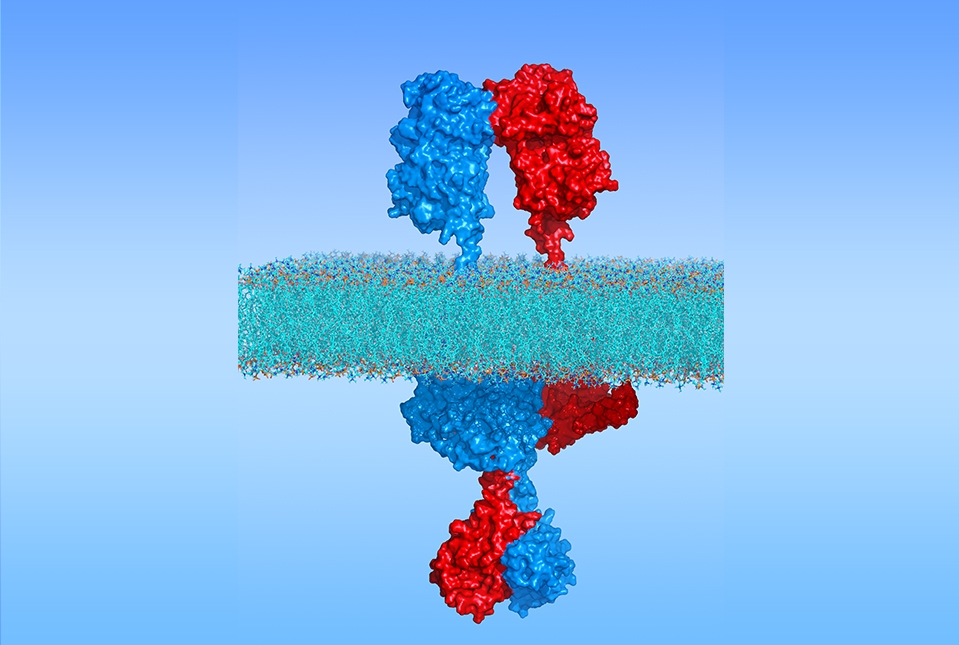
The full-length structure of the atrial natriuretic peptide receptor, pictured here, sheds light on how it functions in heart disease. Two copies of the receptor crossing the cell membrane (middle layer) are shown in red and blue. Credit: Huang Lab Weill Cornell Medicine researchers have determined the full-length structure of a blood pressure-regulating hormone receptor for the first time, uncovering…
With just one slide and three minutes, fourth-year graduate student Erin Keblish described how she is developing a carbon nanotube-based sensor that could act like a “smoke detector” for early signs of deadly sepsis, during Weill Cornell Medicine’s ninth annual Three-Minute Thesis (3MT®) competition on November 13.
Keblish, who is a graduate student in physiology, biophysics and systems biology, explained how the excess production of inflammatory molecules called cytokines in response to an infection can trigger a life-threatening complication called sepsis. She noted that clinicians can successfully treat the condition if caught early.